Format: Online
Sponsored by:

Artificial intelligence is rapidly changing how assurance is delivered — from planning and risk assessment to control testing, reporting, and continuous auditing. This webinar connects the latest research with real-world internal audit practice, helping participants separate hype from evidence and translate insights into concrete steps for their audit function. Attendees will explore where AI adds measurable value, what risks and governance requirements must be addressed, and how internal auditors can evolve their skills and operating model to remain trusted, relevant, and effective in an AI-augmented environment.
DATE: Apr 15, 2026
TIME: 12:00 PM–1:00 PM ET
One (1) NASBA CPE will only be awarded to participants on the live broadcast who are logged in for a minimum of 50 minutes and engage on at least three poll questions per each hour of the event.
Keep scrolling to register.
By the end of this webinar, attendees will be able to:
- Evaluate how AI is transforming internal audit methodologies, risk assessment, and control testing
- Identify practical AI use cases across the audit lifecycle to enhance quality, efficiency, and coverage
- Analyze how AI is reshaping internal audit roles, competencies, and career paths
- Apply principles of ethical AI governance, data integrity, model risk awareness, and human oversight in audit work
- Develop a strategic response and action plan to prepare audit functions for an AI-augmented future
SPEAKER
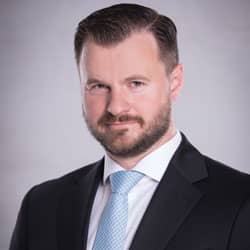
Dr. Marc Eulerich, CIA
University of Duisburg-Essen
Dr. Marc Eulerich is a Professor and Chair of Internal Auditing at the University of Duisburg-Essen and serves as Dean of the Mercator School of Management. He is the Head of the Mercator Audit & Artificial Intelligence Research Center (MAARC), where his work focuses on the intersection of internal auditing, corporate governance, risk management, and the practical application of artificial intelligence and advanced analytics in assurance. Professor Eulerich has published more than 150 scientific papers and seven books, and he regularly translates research findings into actionable guidance for audit leaders and practitioners. He also serves as Chair of the Scientific Committee of the German Institute of Internal Auditors (DIIR) and holds a range of board and advisory/consulting positions, supporting organizations in strengthening governance, modernizing internal audit, and preparing for an AI-augmented future.