Anti-Corruption Topical Requirement
Issued: Nov. 23, 2026 | Effective: Nov. 23, 2027
The Anti-Corruption Topical Requirement and its companion user guide support risk-based internal auditing, professional judgment, and flexibility while providing internal auditors with a consistent basis for evaluating the governance, risk management, and control processes related to anti-corruption activities and programs. The user guide provides practical tips for effective implementation.
Access documents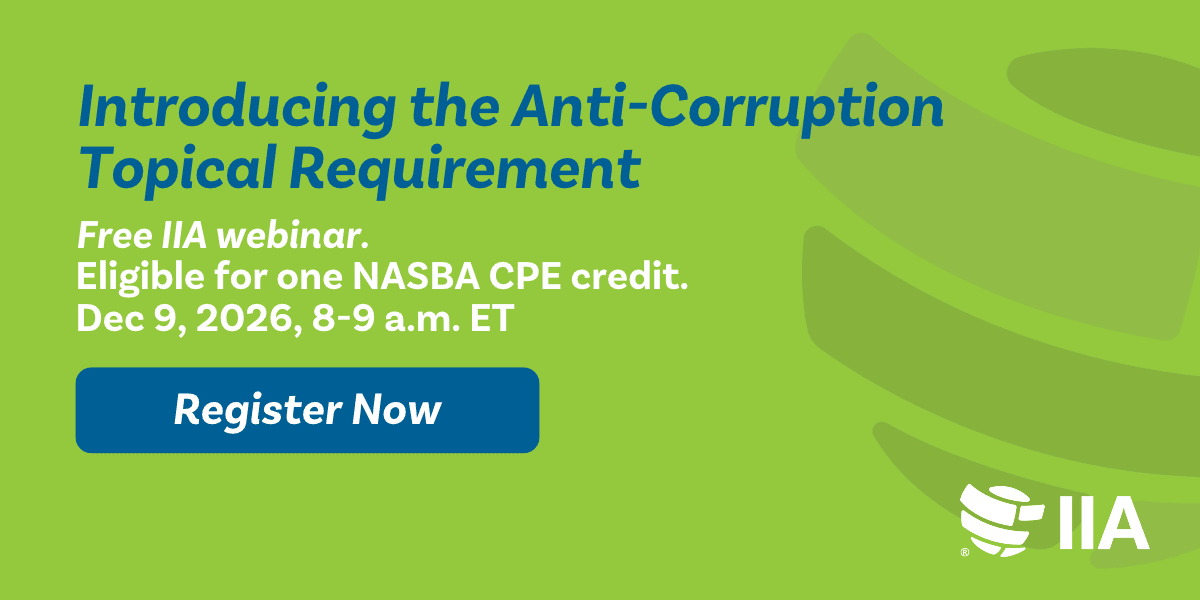
Panelists will discuss real-world approaches to applying the Anti-Corruption Topical Requirement to strengthen assurance and advisory work across anti-corruption and related risks.
Why is anti-corruption important?
Corruption can affect any organization, regardless of size, industry, or jurisdiction. It undermines integrity, transparency, and trust and can expose organizations to significant financial, legal, operational, and reputational consequences. Internal auditors play a critical role in helping organizations address these risks by independently assessing whether governance, risk management, and controls are designed and operating effectively to prevent, detect, and mitigate corruption.